Two more Zumwalt class destroyers for US navy


The U. S. Navy has awarded General Dynamics Bath Iron Works, a subsidiary of General Dynamics, a $1.8 billion contract for the construction of DDG 1001 and DDG 1002, the next two ships in the Zumwalt-class program. DDG 1001 is scheduled to be delivered in December 2015 and DDG 1002 is scheduled to be delivered in February 2018.

"This contract enables us to maintain a strong base of quality shipbuilding jobs in Maine and continue our contributions to sustaining the U.S. Navy fleet," said Jeff Geiger, president of Bath Iron Works. "It provides Bath Iron Works with a healthy backlog of work and reflects the Navy's continued commitment to the DDG-1000 program, as well as their confidence in our ability to build and deliver all three ships of this class." 


Geiger said, "Winning this work is a result of our commitment to operational excellence and to finding more efficient, affordable ways to operate in every part of our business. It gives us the opportunity to continue introducing new and innovative ways to build capable ships for the Navy." 


"We appreciate all the support the Maine Congressional delegation has provided to this program. Their commitment to national defense and their advocacy on behalf of the workers of Maine has been a crucial factor," Geiger said.


China's answer to F 35 !! here comes the J 18


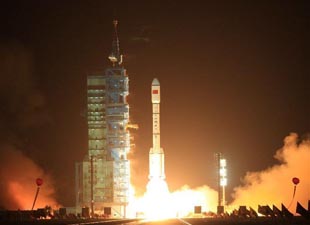
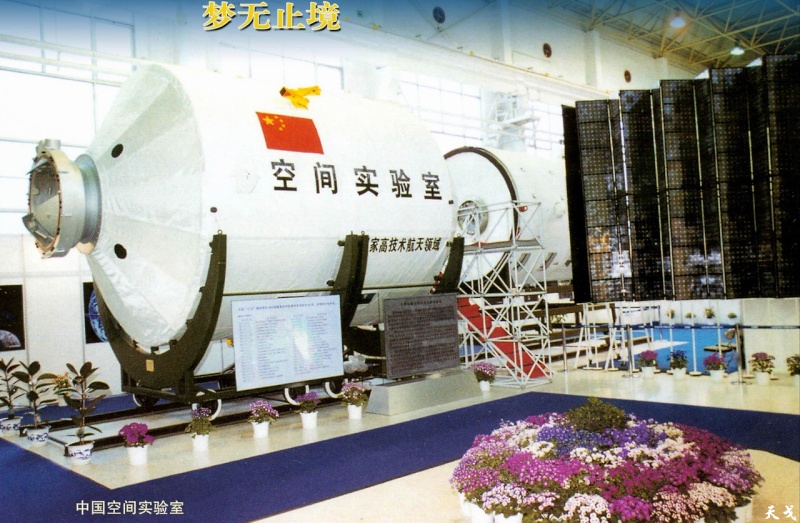
China launches Tiangong-1 space module


What is China's Tiangong 1?
The Tiangong 1 module is China's first spacecraft designed for orbital docking tests and space research. It's name translates to "Heavenly Palace" in English. The module is a prototype for a planned space station, which China plans to build in orbit as part of its human spaceflight program. China's plan currently is to build a 60-ton space station by 2020. [Gallery: Tiangong 1, China's First Space Laboratory]
Why is the Tiangong 1 mission important for China?
China has been taking a stepping stone approach to human spaceflight that began with the 2003 launch of Yang Liwei, China's first astronaut. In 2005, China launched its second human spaceflight, a two-person mission, in 2005. A three-person flight followed in 2008, a mission that included China's first spacewalk.
The Tiangong 1 mission will mark China's first attempt to dock two spacecraft together, a vital skill that will be needed to build a large space station in orbit.
This image depicts a full crew of three astronauts inside China's first space laboratory, the Tiangong 1.
CREDIT: China Manned Space Engineering Office
View full size image
How large is the Tiangong 1 space lab?
Tiangong 1 is a cylindrical spacecraft that is about 34 feet (10.4 meters) long and 11 feet (3.4 m) wide. The space laboratory weighs about 8.5 metric tons, or about 9.4 short tons (U.S.).
The Chinese space station prototype consists of two major segments: the experiment module and a resource module.
The experiment module is the primary work and living area for visiting astronauts. It is powered by two solar arrays and serves as the docking point for arriving Shenzhou spacecraft. According to a mission overview video, the laboratory can be left unmanned or host visiting crews of up to three astronauts.
The solar arrays are attached to the Tiangong 1 resource module, which also contains the propellant tanks and rocket engines for the spacecraft.

How will China launch Tiangong 1?
China will use a special version of its Long March 2F rocket to launch the space laboratory. The rocket, called a Long March 2F T1, is a modified version of the booster China uses to launch its crewed Shenzhou spacecraft. It does not have a launch escape system (since Tiangong 1 is launching unmanned) and includes a custom fairing and an improved rocket booster structure in order to increase its lift capacity, Chinese space officials said.
The Long March 2F T1 rocket is about 170 feet (52 meters) tall and can launch payloads of up to 8.6 metric tons into space. It weighs about 493 metric tons at liftoff. It will launch from the Jiuquan Satellite Launch Center in Northwest China.
When will the first docking at Tiangong 1 occur?
China currently plans to launch its first Shenzhou spacecraft to Tiangong 1 in early November. That mission, Shenzhou 8, will be unmanned. The mission is expected to last at least 12 days and include two docking demonstrations. [Infographic: How China's First Space Station Will Work]
 If that first mission is successful, at least two more flights (Shenzhou 9 and Shenzhou 10) are planned in 2012. The Shenzhou 10 mission may carry the first crew to the Tiangong 1, and may include China's first female astronaut, according to state media reports.  
A Chinese Shenzhou spacecraft closes in on the country's Tiangong 1 space lab in this still from a mission profile video.
CREDIT: China Manned Space Engineering Office
View full size image
How high will the Tiangong 1 fly?
The Tiangong 1 module will initially launch into a 217-mile (350-kilometer) orbit around Earth, which will require two maneuvers by the spacecraft after liftoff in order to reach the planned flight path. While in this orbit, the spacecraft will be put through several systems tests.
If all goes well, the Tiangong 1 will be lowered to an orbit of about 213 miles (343 km) in order to meet the Shenzhou 8 spacecraft in November. At the end of that mission, the space lab will return to the higher orbit to await the next visiting Shenzhou spacecraft.
Where is the Tiangong 1 space laboratory controlled from?
The Tiangong 1 mission will be controlled by flight controllers at the Beijing Aerospace Flight Control Center, the Mission Control for China's human spaceflight program.
China's Tiangong 1 re-entry and disposal in Earth's atmosphere.
China plans to dispose of the Tiangong 1 space laboratory by commanding it to burn up in Earth's atmosphere at the end of a two-year mission.
CREDIT: China Manned Space Engineering Office
View full size image
How long can the Tiangong 1 spacecraft stay in space?
Currently, China plans to keep the Tiangong 1 module in orbit for about two years, after which the spacecraft will be commanded to destroy itself by burning up in Earth's atmosphere, according to a mission profile video.

India conducts successful trial of AGNI II missile


India's Agni-II was launched successfully today at 9:30AM from the Eastern seaboard. According to a DRDO statement, "The successful launch once again proved reliability of the medium range surface to surface missile." The 2000-km range surface to surface missile, already inducted and part of countries arsenal for strategic deterrence, was launched as a training exercise by the country's nuclear command. The missile reached an apogee (peak altitude) of 220-km and hit the target. All the radar, telemetry systems, ectopic system tracked & monitored all parameters throughout the trajectory. Two ships located near the target point have tracked the missile in the final stage.


India test fires shaurya missile


India successfully flight-tested its nuclear capable surface-to-surface 'Shourya' missile from Integrated Test Range (ITR) at Chandipur, about 15 km from here, Saturday.

'Shourya' can carry a one tonne nuclear and conventional warhead over 700 kms and is powered by two-stage solid fuel.

The state-of-the-art missile is equipped with multiple advanced computing systems, very high accuracy navigation and guidance systems, defence sources here said.

"The trial of the missile, which took off from Launch Complex-III of ITR at 1430 hrs, was fully successful," ITR Director S P Dash said.

The missile was flight tested from a canister in a ground launch mode. "The launch was perfect like in text book and followed the path exactly to the predefined target," he said.

All radar, telemetry and electro optical stations along the east coast have tracked and monitored all the mission parameters, Dash said.

Ships located near the target have also tracked and witnessed the flight test and the missile reached the target within few meters accuracy, a defence official said.

The defence official said the sophisticated missile combines simplicity of operation with low maintenance. It can be easily handled, transported and stored in the canister for longer shelf life.

The high manoeuvrability of the missile makes it less vulnerable to available anti-missile defence systems.

"We have designed 'Shourya' missile in such a way that it can be launched from under water as easily as from land.

The gas-filled canister that houses the missile fits easily into a submarine. The underwater leg of the nuclear trial needs to be totally reliable and needs a state-of-the-art missile," said a scientist associated with the project.

DRDO chief controller Avinash Chander congratulated the scientists and employees of the organisation and other establishments for the successful test flight.

As a safety measure, prior to the test, Balasore district administration had temporarily evacuated 400 families residing within 2 km radius of the launch pad to nearby shelter camps early this morning, official sources said.

Indian Navy to induct new heavy tanker


Strengthening its combat support capabilities, Indian Navy will induct its second Italy-made fleet tanker, INS Shakti, in Vishakhapatnam on October 1.

INS Shakti, the second of the Deepak Class fleet tanker constructed by Italian Fincantieri Shipyard, will be handed over to the Navy on Friday and will be commissioned in operational service on October 1, Navy officials said here.

The first tanker christened INS Deepak was commissioned into the Navy in Mumbai on January 21 this year.

INS Shakti will be the second fleet tanker to be inducted into the Eastern fleet and will help in strengthening combat support operations at sea and extend the reach of the naval power of the nation.

With the induction of the warship, the Navy will have two each fleet tankers on both the seaboards.

Though INS Shakti is essentially a tanker, it is a thoughtfully-designed and versatile platform capable of a large number of roles. In addition to its traditional role of supplying fuel to ships at sea, the ship is also capable of transporting and supplying ammunitions, materials and provisions.

The vessel is also capable of undertaking humanitarian assistance and disaster relief operations with its modern medical health facilities.

The ship is one of the largest vessels of the navy, 175 metres long, 25 metres wide and has a full load displacement of 27,000 tonnes.

The two Deepak class fleet tankers will be the mainstay tankers/ support ships of the Indian Navy in the first half of the 21st century.

Each ship is equipped with four AK-630 guns for close defence supplies and high-tech fire control system supplied by Bharat Electronics Limited.


General characteristics
Class and type:Deepak-class tanker
Displacement:19150 tons(light condition), 27,000 tons ( Maximum)
Length:175 m
Beam:25 m
Draft:9.1 m ( Max )
Depth:19.3 m
Decks:10
Installed power:9.3 MW
Propulsion:Diesel Engines ( 02 ) from MAN and one CPP
Speed:20 knots
Endurance:10000 nm at 20 knots
Complement:180 sailors and 20 officers

india's P-8I nears flight debut


Boeing is close to conducting the first flight of a 737-800-based P-8I maritime patrol aircraft for the Indian navy, with it's first example having emerged at the manufacturer’s Renton Field assembly site in Washington.


Boeing is close to conducting the first flight of a 737-800-based P-8I maritime patrol aircraft for the Indian navy, with it's first example having emerged at the manufacturer’s Renton Field assembly site in Washington.

Photographed by AirSpace user Brandon Farris earlier this month, the aircraft has already been painted in Indian markings and assigned the registration IN320. It is the first of eight P-8Is on order as replacements for the navy’s current Tupolev Tu-142 turboprops. The aircraft was last pictured as it entered final assembly in June.

Derived from the P-8A Poseidon now in development testing for the US Navy, India’s next-generation maritime surveillance aircraft will enter use from early 2013.

India’s examples will differ from the USN’s aircraft through the addition of a belly-mounted radar, which once combined with other sensors will afford the aircraft a 360° surveillance capability against airborne targets.
Another key piece of equipment for the P-8I will be its Raytheon Mk54 lightweight torpedoes. New Delhi signed an $86 million deal in June for an initial 32 of the weapons.

Boeing performed the first flight of a production P-8A for the USN from Renton Field in July. India is the first and so for lone export buyer for the 737 derivative. Test and acceptance activities will be performed from Boeing’s Seattle Field site in Washington.