Showing posts with label china. Show all posts

PLAN Gets Serious About Airborne Early Warning


PLAN Gets Serious About Airborne Early Warning


Until recently, the idea of People's Liberation Army Navy air assets (PLANAF) making a serious contribution to coastal or fleet air defense was somewhat doubtful due to a complete deficit of airborne early warning radars (AEW). With the acquisition of three new systems PLANAF has rapidly and exponentially increased it's air defense potential. 

In January of this year the first AEW systems were seen in PLANAF colors: Kamov Ka-31 AEW helos purchased from Russia. The Ka-31 (NATO: Helix) features a belly-mounted retractable radar array capable of tracking both air and sea targets. Negotiations for these aircraft were first reported in April 2006, delivery was announced by Rosoboronexport at the Zhuhai Airshow in November 2010. When first seen many observers predicted these aircraft would be a part of any future PLANAF carrier air wing, however, indigenous AEW developments bring this into question. 

The day prior to the maiden cruise of the refurbished ex-Soviet carrier EX-VARYAG, a new AEW variant of the Changhe Z-8 helicopter was seen landing on the newly painted flight deck. The Z-8, itself a Chinese-produced variant of the Aerospatiale Sa-321j, has been the workhorse of PLANAF rotary-wing aviation for over two decades and has been produced in many sub-variants. The Z-8 AEW features a retractable radar array positioned below rear loading ramp door, once airborne the rotating array is lowered vertically and presumably can provide 360° coverage like the Ka-31. Photos of the prototype Z-8 AEW variant were first seen in October 2009, with the first seen in PLANAF colors in April 2011.

Now that two AEW helos have been identified in PLANAF service, it's not clear if the Ka-31s were purchased solely as a hedge against delays in the Z-8AEW program, or if they are intended to fly from destroyers or other ships smaller than EX-VARYAG perhaps in a surface warfare targeting role. What is certain is that both the mockup of the EX-VARYAG at Wuhan and the actual ship have only been seen with Z-8. 

Today the first clear image was seen on the Chinese internet of a fixed wing AEW aircraft in PLANAF colors, the Y-8WH "High New 5" AEW. The Y-8W has been in PLAAF service for at least three years, and was featured in the 2009 PRC 60th Anniversary Military Parade. PLAN's new Y-8WH variant apparently uses the same KJ-200 "Balance Beam" radar as the Y-8W, presumably with some radios or other C2 avionics unique to PLAN. Although the serial number in the image is partially obliterated, enough remains to identify the aircraft as belonging to the PLANAF 1st Independent Regiment at Leiyang, a subordinate unit of PLAN's North Sea Fleet. 

With these three new types PLANAF seems poised to fully exploit the fleet air defense potential of the EX-VARYAG and her expected complement of J-15 navalized Flankers, as well as provide a credible air defense capability beyond the reach of ground-based radar installations. 


PLANAF 2nd "Specialized" Division getting three more Y-8GX5 AEW&C birds


PLANAF 2nd "Specialized" Division getting three more Y-8GX5 AEW&C birds


Ahmadinejad unveils Iran's newest fighter jet


Ahmadinejad unveils Iran's newest fighter jet


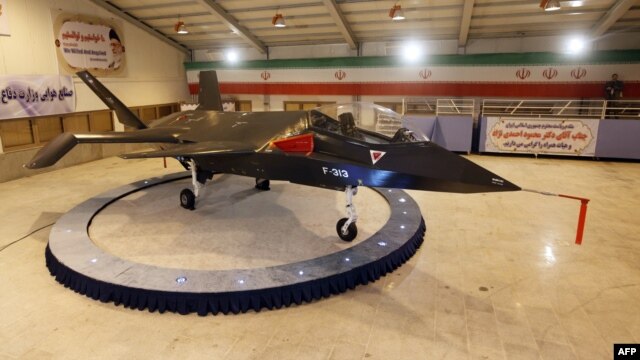
Iran on Saturday unveiled its newest combat jet, a domestically manufactured fighter-bomber that military officials claim can evade radar.
President Mahmoud Ahmadinejad said in a ceremony broadcast on state TV that building the Qaher F-313, or Dominant F-313, shows Iran's will to "conquer scientific peaks."


The Qaher is one of several aircraft designs the Iranian military has rolled out since 2007. Tehran has repeatedly claimed to have developed advanced military technologies in recent years, but its claims cannot be independently verified because the country does not release technical details of its arsenals.
The Islamic republic launched a self-sufficient military program in the 1980s to compensate for a Western weapons embargo that banned export of military technology and equipment to Iran. Since 1992, Iran has produced its own tanks, armored personnel carriers, missiles, torpedoes, drones and fighter planes.
"Qaher is a fully indigenous aircraft designed and built by our aerospace experts. This is a radar-evading plane that can fly at low altitude, carry weapons, engage enemy aircrafts and land at short airstrips," Defense Minister Ahmad Vahidi said.
Vahidi said advanced materials were used to manufacture the body of the aircraft, making it Iran's best stealth plane.
However, some reports suggest that Iran's program relies on equipment supplied by major international defense contractors and that it incorporates parts made abroad or uses outside engineered technologies in its domestic designs.
Still photos of the Qaher released by the official IRNA news agency and pictures on state TV showed a single-seat jet. They described it as a fighter-bomber that can combat other aircraft and ground targets.
Iran's English-language state Press TV said Qaher was similar to the American-made F/A-18, an advanced fighter capable of dogfighting as well as penetrating enemy air defenses to strike ground targets.
But Hasan Parvaneh, an official in charge of the project, said the physical design of the Iranian plane was unique and bore no resemblance to any foreign fighter jet.
"Development depends on our will. If we don't have a will, no one can take us there," Ahmadinejad told the inauguration ceremony in Tehran. "Once we imported cars and assembled them here. Now, we are at a point where we can design, build and get planes in the air."
Ahmadinejad said Qaher was built for deterrence.
"It's not for expansionism. It's for deterrence," he said, claiming the aircraft was among the most advanced fighter jets in the world.
In 2007, Iran unveiled what it said was its first domestically manufactured fighter jet, called Azarakhsh or Lightning. In the same year, it claimed that Azarakhsh had reached industrial production stage.
Saeqeh, or Thunder, was a follow-up aircraft derived from Azarakhsh. Iran unveiled its first squadron of Saeqeh fighter bombers in an air show in September 2010.


PHOTOS: First Ever India-China Naval Exercise

PHOTOS: First Ever India-China Naval Exercise


On completion of the four day visit to Shanghai, INS Shivalik and PLA(N) Ma'anshan conducted passage exercises comprising naval manouevers, communication exercises and cross deck helicopter landings.


Yuan class SSK is ready to join the " PLAN " fleet


about yuan class SSK :-

Yuan class
Class overview
Builders: Wuhan Shipbuilding, Wuhan
Operators:  People's Liberation Army Navy Pakistan Navy
Preceded by: Type 039 (Song class)
Succeeded by: New next-generation SSG (under development)
Type 041 Improved Yuan class [1]
Building: N/A
Planned: N/A
Completed: 7
General characteristics
Length: 75 m
Propulsion: Diesel-electric, 1 shaft, AIP (air-independent propulsion)
Speed: 20+ kts

CHINA'S NEW TOY " PL-10" AAM SPOTTED ON A J-11B


Close by, a freshly minted J-11B undergo flight-testing


China's answer to F 35 !! here comes the J 18


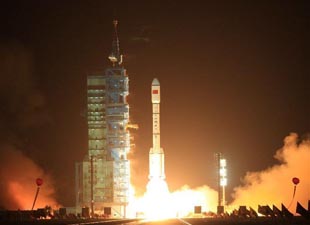
China launches Tiangong-1 space module


What is China's Tiangong 1?
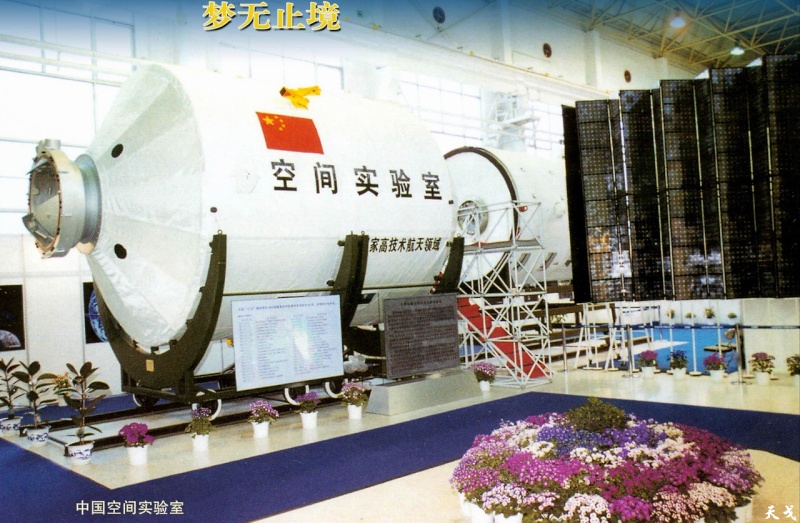
The Tiangong 1 module is China's first spacecraft designed for orbital docking tests and space research. It's name translates to "Heavenly Palace" in English. The module is a prototype for a planned space station, which China plans to build in orbit as part of its human spaceflight program. China's plan currently is to build a 60-ton space station by 2020. [Gallery: Tiangong 1, China's First Space Laboratory]
Why is the Tiangong 1 mission important for China?
China has been taking a stepping stone approach to human spaceflight that began with the 2003 launch of Yang Liwei, China's first astronaut. In 2005, China launched its second human spaceflight, a two-person mission, in 2005. A three-person flight followed in 2008, a mission that included China's first spacewalk.
The Tiangong 1 mission will mark China's first attempt to dock two spacecraft together, a vital skill that will be needed to build a large space station in orbit.
This image depicts a full crew of three astronauts inside China's first space laboratory, the Tiangong 1.
CREDIT: China Manned Space Engineering Office
View full size image
How large is the Tiangong 1 space lab?
Tiangong 1 is a cylindrical spacecraft that is about 34 feet (10.4 meters) long and 11 feet (3.4 m) wide. The space laboratory weighs about 8.5 metric tons, or about 9.4 short tons (U.S.).
The Chinese space station prototype consists of two major segments: the experiment module and a resource module.
The experiment module is the primary work and living area for visiting astronauts. It is powered by two solar arrays and serves as the docking point for arriving Shenzhou spacecraft. According to a mission overview video, the laboratory can be left unmanned or host visiting crews of up to three astronauts.
The solar arrays are attached to the Tiangong 1 resource module, which also contains the propellant tanks and rocket engines for the spacecraft.

How will China launch Tiangong 1?
China will use a special version of its Long March 2F rocket to launch the space laboratory. The rocket, called a Long March 2F T1, is a modified version of the booster China uses to launch its crewed Shenzhou spacecraft. It does not have a launch escape system (since Tiangong 1 is launching unmanned) and includes a custom fairing and an improved rocket booster structure in order to increase its lift capacity, Chinese space officials said.
The Long March 2F T1 rocket is about 170 feet (52 meters) tall and can launch payloads of up to 8.6 metric tons into space. It weighs about 493 metric tons at liftoff. It will launch from the Jiuquan Satellite Launch Center in Northwest China.
When will the first docking at Tiangong 1 occur?
China currently plans to launch its first Shenzhou spacecraft to Tiangong 1 in early November. That mission, Shenzhou 8, will be unmanned. The mission is expected to last at least 12 days and include two docking demonstrations. [Infographic: How China's First Space Station Will Work]
 If that first mission is successful, at least two more flights (Shenzhou 9 and Shenzhou 10) are planned in 2012. The Shenzhou 10 mission may carry the first crew to the Tiangong 1, and may include China's first female astronaut, according to state media reports.  
A Chinese Shenzhou spacecraft closes in on the country's Tiangong 1 space lab in this still from a mission profile video.
CREDIT: China Manned Space Engineering Office
View full size image
How high will the Tiangong 1 fly?
The Tiangong 1 module will initially launch into a 217-mile (350-kilometer) orbit around Earth, which will require two maneuvers by the spacecraft after liftoff in order to reach the planned flight path. While in this orbit, the spacecraft will be put through several systems tests.
If all goes well, the Tiangong 1 will be lowered to an orbit of about 213 miles (343 km) in order to meet the Shenzhou 8 spacecraft in November. At the end of that mission, the space lab will return to the higher orbit to await the next visiting Shenzhou spacecraft.
Where is the Tiangong 1 space laboratory controlled from?
The Tiangong 1 mission will be controlled by flight controllers at the Beijing Aerospace Flight Control Center, the Mission Control for China's human spaceflight program.
China's Tiangong 1 re-entry and disposal in Earth's atmosphere.
China plans to dispose of the Tiangong 1 space laboratory by commanding it to burn up in Earth's atmosphere at the end of a two-year mission.
CREDIT: China Manned Space Engineering Office
View full size image
How long can the Tiangong 1 spacecraft stay in space?
Currently, China plans to keep the Tiangong 1 module in orbit for about two years, after which the spacecraft will be commanded to destroy itself by burning up in Earth's atmosphere, according to a mission profile video.

CHINA'S NEW UAV SNAPS


China's AC313 Helicopter


China's domestically developed civilian freight helicopter, the AC313, successfully climbed to a height of 8,000 meters, an altitude that will enable the chopper to fulfill plateau missions.
The AC313, developed and manufactured by the Aviation Industry Corporation of China (AVIC), hit its highest altitude to date during a trial flight on Sept. 2 at Gonghe Airport in northwest China's Qinghai Province, AVIC said in a statement Tuesday.
"The test flight has fully proven the helicopter's function and reliability, and will decide the range of its flight altitude," said Xu Chaoliang, chief engineer of the AC313.
The helicopter, with a Maximum Takeoff Weight of 13.8 tons, can be used for transportation, forest fire prevention, emergency search and rescue missions, disaster relief and medical aid.
The AC313 completed its maiden flight in March 2010.


second YUZHAO class LPD launched


Class overview
Operators: People's Liberation Army Navy
Cost:USD$300 mil (estimated)
In service:2007
Building:1
Completed:2
Active:2
General characteristics
Type:Amphibious transport dock
Displacement:20,000 long tons (20,000 t)
Length:210 m (689 ft 0 in)
Beam:28 m (91 ft 10 in)
Draft:7 m (23 ft 0 in)
Propulsion:CODAD
4 × SEMT Pielstick 16 PC2.6 V400diesel engines, 47,200 hp (35,197 kW)
2 × shafts[1]
Speed:22 knots (41 km/h; 25 mph)+
Range:6,000 nmi (11,000 km) at 18 knots (33 km/h; 21 mph)
Boats and landing
craft carried:
• 4 × air-cushioned landing craft
• 2 × landing craft on port/starboard davits
Capacity:15-20 armoured vehicles
Troops:500-800 troops
Complement:120
Sensors and
processing systems:
• 1 × Type 360 Radar Seagull S, E/F-band surface search radar
• 1 × Type 364 Radar, Seagull C, G-band air search radar aft
• 1 × Type 344 Radar, I band fire control radar
• 1 × navigational radar
Armament:• 1 × AK-176 76 mm (3.0 in) gun
• 4 × AK-630 30 mm (1.2 in) CIWS
• 4 × 18-tube Type 726-4 decoy/chafflauncher
• Possible installation of 2-4 heavy machine guns (Fitted for but not with)
Aircraft carried:2-4 Z-8 Super Frelon


Chinese SPY SHIP detected along the Indian ocean


India detected a Chinese spy ship disguised as a fishing trawler in the Indian Ocean a few months ago. By the time the ship figured on Indian radars, it had operated already for about 22 days and was positioned off-the cost of Little Anadaman - an area which is considered sensitive and crucial in the ongoing battle for supremacy over the Indian Ocean region between India and China.

Immediately after detection, an Indian Navy Ship was sent after it. However, since the Chinese ship was in international waters, no punitive action could be taken against it. The Indian Naval ship, instead, tailed the Chinese ship sending out a clear message that India was aware of its actual mission. In order to avoid the Indian Navy tail, the Chinese Ship moved towards Sri Lanka and docked at the Colombo. Inquiries by the Indian security agencies revealed that ship as many as 22 Laboratories on board.

A report sent up to government, which NDTV has access to, claims that the Chinese ship was mapping the Indian Ocean and picking up crucial Bathymetric data. Other Laboratories on board the ship were designed to collect data on the currents of the Indian Ocean, the temperature at various depths and also very crucially, underwater obstructions and obstacles. Bathymetric data is crucial for submarine and Carrier based operations. Information about ocean currents, on the other hand, is crucial if torpedoes are to be used.

India's assessment is that China will be able to carry out Aircraft carrier based operations by 2017. China doesn't have an operational aircraft carrier yet. The collection of data from the Indian Ocean is designed towards this. Once the Chinese Carrier Battle Group is ready for operations the Indian Ocean region will be one of the main focus areas of China. This will not only help China secure the shipping lanes that carry it's exports towards Europe and North America but protect oil and coal imports. However, the presence of the Chinese Navy in the Indian Ocean region cannot be altogether benign for India. In fact the presence of a Carrier Battle Group in Indian Ocean region is a serious military threat for India. Chinese ground forces already have an edge over their Indian counterparts along the land borders. Chinese naval presence in Indian Ocean region is, therefore, a cause of serious concern for India.

What is also worrying Indian security agencies is the presence several Chinese fishing trawlers along Wheeler Island off the Orissa coast during test launches of missiles. All Indian missiles are tested from Wheeler Islands. Security agencies have told the government that fishing trawlers are most likely monitoring the Indian missile test launches and colleting telemetric data of the missile. Telemetric data is crucial to build effective counter measure against missiles.

Agni-II Missiles Moved along Chinese border


In the wake of a recent Pentagon report that China is moving advanced CSS-5 ballistic missiles to areas close to the Sino-Indian border, New Delhi is clearly taking no chances.

The government is now ready to induct the nuclear-capable Agni-III ballistic missile — with a range of 3,000-3,500 km and capable of hitting targets in China — into the Indian armed forces. It is also in the process of acquiring 42 more Russian-origin Sukhoi-30 MKI frontline fighters to “populate” airbases at Tezpur and Chabua in Assam to bolster the eastern sector.

The government is also reportedly moving the strategic Agni-II missile inducted earlier to areas near the Chinese border. These have a range of around 2,000 km.


Extra land is reportedly being procured in West Bengal and elsewhere to deploy these missiles. India is also developing the Agni-V missile (with a range of 5,000 km) that could hit targets deep within China.
When contacted, Army sources on Tuesday denied that missile units had been moved to the Eastern Command due to the Chinese threat perception.

The government is also taking other steps, including raising two more Army mountain divisions (30,000 troops) that will probably be deployed on the China border.
The Cabinet Committee on Security is considering the proposal for further troops augmentation near the Sino-Indian border.