Russia’s Sukhoi Super 30: The Outlook for India’s Ultra-Advanced Flanker Upgrade


Russia’s Sukhoi Super 30: The Outlook for India’s Ultra-Advanced Flanker Upgrade


Come 2012 the first batch of 50 Sukhoi Su-30MKI multi-role combat aircraft (MRCA), which were delivered to the Indian Air Force (IAF) between 2001 and 2003, will be shipped back to Russia’s IRKUT Corp in Irkutsk where they will be refurbished and upgraded from into formidable air supremacy MRCAs (to be called Super Su-30MKI), and delivered back to the IAF starting 2014. The upgrades, costing Rs109.2 billion, will include the strengthening and service life-extension of the Su-30MKI airframes; and installation of uprated turbofans, new glass cockpit avionics, mission management avionics, and integrated defensive aids suites. This will be followed by another batch of 42 new-build Su-30MKIs to be subjected to identical upgrades, with deliveries of these aircraft beginning in 2015 and ending in 2018. It is expected that in future the Su-30MKMs of Malaysia and Su-30MKAs of Algeria too will be subjected to such ‘deep’ upgrade programmes.

Aero India 2013

Aero India 2013


PLAN Gets Serious About Airborne Early Warning


PLAN Gets Serious About Airborne Early Warning


Until recently, the idea of People's Liberation Army Navy air assets (PLANAF) making a serious contribution to coastal or fleet air defense was somewhat doubtful due to a complete deficit of airborne early warning radars (AEW). With the acquisition of three new systems PLANAF has rapidly and exponentially increased it's air defense potential. 

In January of this year the first AEW systems were seen in PLANAF colors: Kamov Ka-31 AEW helos purchased from Russia. The Ka-31 (NATO: Helix) features a belly-mounted retractable radar array capable of tracking both air and sea targets. Negotiations for these aircraft were first reported in April 2006, delivery was announced by Rosoboronexport at the Zhuhai Airshow in November 2010. When first seen many observers predicted these aircraft would be a part of any future PLANAF carrier air wing, however, indigenous AEW developments bring this into question. 

The day prior to the maiden cruise of the refurbished ex-Soviet carrier EX-VARYAG, a new AEW variant of the Changhe Z-8 helicopter was seen landing on the newly painted flight deck. The Z-8, itself a Chinese-produced variant of the Aerospatiale Sa-321j, has been the workhorse of PLANAF rotary-wing aviation for over two decades and has been produced in many sub-variants. The Z-8 AEW features a retractable radar array positioned below rear loading ramp door, once airborne the rotating array is lowered vertically and presumably can provide 360° coverage like the Ka-31. Photos of the prototype Z-8 AEW variant were first seen in October 2009, with the first seen in PLANAF colors in April 2011.

Now that two AEW helos have been identified in PLANAF service, it's not clear if the Ka-31s were purchased solely as a hedge against delays in the Z-8AEW program, or if they are intended to fly from destroyers or other ships smaller than EX-VARYAG perhaps in a surface warfare targeting role. What is certain is that both the mockup of the EX-VARYAG at Wuhan and the actual ship have only been seen with Z-8. 

Today the first clear image was seen on the Chinese internet of a fixed wing AEW aircraft in PLANAF colors, the Y-8WH "High New 5" AEW. The Y-8W has been in PLAAF service for at least three years, and was featured in the 2009 PRC 60th Anniversary Military Parade. PLAN's new Y-8WH variant apparently uses the same KJ-200 "Balance Beam" radar as the Y-8W, presumably with some radios or other C2 avionics unique to PLAN. Although the serial number in the image is partially obliterated, enough remains to identify the aircraft as belonging to the PLANAF 1st Independent Regiment at Leiyang, a subordinate unit of PLAN's North Sea Fleet. 

With these three new types PLANAF seems poised to fully exploit the fleet air defense potential of the EX-VARYAG and her expected complement of J-15 navalized Flankers, as well as provide a credible air defense capability beyond the reach of ground-based radar installations. 


PLANAF 2nd "Specialized" Division getting three more Y-8GX5 AEW&C birds


PLANAF 2nd "Specialized" Division getting three more Y-8GX5 AEW&C birds


Iron Dome at Aero india 2013

Iron Dome at Aero india 2013 


Israeli missile-maker Rafael will display at Aero India 2013, for the first time, it's 'game changer', the Iron Dome active defence system against short-range artillery rockets, most notably deployed during the November 2011 hostilities between Israel and Palestine. The Iron Dome will be part of an elaborate outside display of the full portfolio of the company's air and missile defence systems. 
The company's outer display will also include David's Sling multi-platform interceptor system, the SpyDer SR/MR and the entire Spike family of tactical guided missiles.


Nirbhay Missile launch next month :DRDO

Nirbhay Missile launch next month :DRDO


India's Nirbhay cruise weapon will be tested in February, DRDO chief Dr V.K. Saraswat said at a press conference last week in Bangalore. This is the first time in over a year that a definite time-frame has been provided on the mysterious programme. Last checked, the missile was to have been tested in July-August 2012.

As I've earlier reported, this will be, without a doubt, the most significant weapon test since, perhaps, the Agni-III. The Nirbhay, shrouded in secrecy for long, is understood to be a two-stage high subsonic cruise missile with loitering capabilities. Sources suggest that apart from the engine (apparently supplied by NPO Saturn), the rest of the system is fully indigenous.


India launched K-15 SLBM

India launched K-15 SLBM 


India's DRDO today conducted the 11th successful underwater test of the K-15 medium range subsurface-launched ballistic missile from the Bay of Bengal. Sources on board one of the Indian Navy ships monitoring the launch report that the launch was a successful one. The launch took place from a special R-glass cannister from a specially configured underwater pontoon launch platform. The K-15,officially designated B-05, with a range in excess of 750-km (its official range is classified) is the submarine-launched version of the land-launched Shourya that has been tested four times so far. The country's Arihant-class SSBNs will be able to deploy 12 K-15s or four of the much longer range K-4 missiles, still under development.

Official statement by DRDO: DRDO developed underwater launched missile B05 was successfully flight tested on 27 Jan 2013 from Bay of Bengal off the coast of Visakhapatnam. The missile launched from a pontoon, was tested for the full range and met all the mission objectives. All the parameters of the vehicle were monitored by the radar all through the trajectory and terminal events have taken place exactly as expected. Scientific Adviser to Raksha Mantri Dr VK Saraswat congratulated all the scientists, technicians of DRDO on the successful flight test.  Defence Minister AK Antony congratulated all the scientists for successful launch of B05.


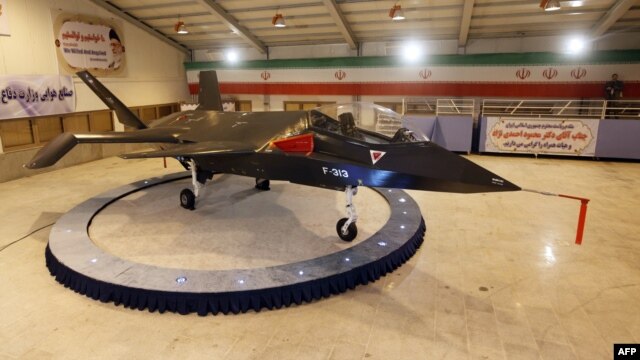
Ahmadinejad unveils Iran's newest fighter jet


Ahmadinejad unveils Iran's newest fighter jet


Iran on Saturday unveiled its newest combat jet, a domestically manufactured fighter-bomber that military officials claim can evade radar.
President Mahmoud Ahmadinejad said in a ceremony broadcast on state TV that building the Qaher F-313, or Dominant F-313, shows Iran's will to "conquer scientific peaks."


The Qaher is one of several aircraft designs the Iranian military has rolled out since 2007. Tehran has repeatedly claimed to have developed advanced military technologies in recent years, but its claims cannot be independently verified because the country does not release technical details of its arsenals.
The Islamic republic launched a self-sufficient military program in the 1980s to compensate for a Western weapons embargo that banned export of military technology and equipment to Iran. Since 1992, Iran has produced its own tanks, armored personnel carriers, missiles, torpedoes, drones and fighter planes.
"Qaher is a fully indigenous aircraft designed and built by our aerospace experts. This is a radar-evading plane that can fly at low altitude, carry weapons, engage enemy aircrafts and land at short airstrips," Defense Minister Ahmad Vahidi said.
Vahidi said advanced materials were used to manufacture the body of the aircraft, making it Iran's best stealth plane.
However, some reports suggest that Iran's program relies on equipment supplied by major international defense contractors and that it incorporates parts made abroad or uses outside engineered technologies in its domestic designs.
Still photos of the Qaher released by the official IRNA news agency and pictures on state TV showed a single-seat jet. They described it as a fighter-bomber that can combat other aircraft and ground targets.
Iran's English-language state Press TV said Qaher was similar to the American-made F/A-18, an advanced fighter capable of dogfighting as well as penetrating enemy air defenses to strike ground targets.
But Hasan Parvaneh, an official in charge of the project, said the physical design of the Iranian plane was unique and bore no resemblance to any foreign fighter jet.
"Development depends on our will. If we don't have a will, no one can take us there," Ahmadinejad told the inauguration ceremony in Tehran. "Once we imported cars and assembled them here. Now, we are at a point where we can design, build and get planes in the air."
Ahmadinejad said Qaher was built for deterrence.
"It's not for expansionism. It's for deterrence," he said, claiming the aircraft was among the most advanced fighter jets in the world.
In 2007, Iran unveiled what it said was its first domestically manufactured fighter jet, called Azarakhsh or Lightning. In the same year, it claimed that Azarakhsh had reached industrial production stage.
Saeqeh, or Thunder, was a follow-up aircraft derived from Azarakhsh. Iran unveiled its first squadron of Saeqeh fighter bombers in an air show in September 2010.


PHOTOS: First Ever India-China Naval Exercise

PHOTOS: First Ever India-China Naval Exercise


On completion of the four day visit to Shanghai, INS Shivalik and PLA(N) Ma'anshan conducted passage exercises comprising naval manouevers, communication exercises and cross deck helicopter landings.


Light Combat Helicopter Sea-level Trials SuccessfulLight Combat Helicopter Sea-level Trials SuccessfulLight Combat Helicopter Sea-level Trials Successful


Light Combat Helicopter Sea-level Trials Successful


Exclusive photos of the ongoing sea-level trials of the second prototype of India's Light Combat Helicopter (LCH) on the outskirts of the Chennai. Check out that sexy cockpit shot as the pilots near the East coast. The last photo, also taken from the LCH, shows the IAF chase Mi-8 from Yelahanka air force station that's flying with and observing/recording the LCH during the current round of sea-level trials. The trials will continue for another 7-9 days.


Agni II test

Agni II Test


India's First Embraer AEW&C On Indian Soil


India's indigenous Embraer AEW&C On Indian Soil


DRDO Statement: The first fully modified aircraft for India's indigenous Airborne Early Warning and Control System landed on Indian soil at CABS (Centre for Airborne Systems, Bangalore, a DRDO laboratory) at 22:10 hours at HAL airport, Wednesdat night. The aircraft and the flight crew was received by Dr Christopher Program Director and Dr K Tamil Mani, Chief Executive, CEMILAC. The acceptance of the Aircraft was completed over a period of 15 days at Embraer Facilities in Brazil,  by a team from CABS,  its work centres, CEMILAC, DGAQA & IAF. The Aircraft was flagged off from M/s Embraer, Brazil on 17 Aug 2012 at 1125 hours by Shri G Elangovan, Chief Controller R&D, Dr S Christopher, Programme Director, Mr K Tamil Mani, Chief Executive, CEMILAC and team members and was flown across multiple continents to arrive in India today.

The Aircraft ferried with several mission system external components of DRDO including the Active Electronically scanned Array Antenna with passive electronics fitted on the Aircraft. The arrival of this Aircraft marks the beginning of another phase of journey leading to the next major milestone of integration of the DRDO developed mission system, which will be followed by development flight trials in India beginning of 2013. It may be noted that this is the first Aircraft delivered by M/s Embraer for which the contract was signed in 2008. The next Aircraft is expected to arrive in December 2012.

India's New AW101 VVIP Merlin Lift Off

Iron Dome: A Missile Shield That Works


Iron Dome: A Missile Shield That Works


Military gear-heads like to boast about how this or that latest technology that they’re fond of – or that their company, or country, is pushing – is a “game-changer.”
The major-combat debut of Israel‘s Iron Dome missile-defense shield over the past several days may be one of the few that can legitimately make that claim.
It is destroying about 90% of the rockets and missiles that Hamas, the Palestinian political party governing Gaza, is firing into southern Israel, Israeli officials say.
One battery of Iron Dome anti-missile missiles downed 100% during a salvo, a senior Israeli official tells.
“We’ve got about a 90% success rate,” he says, proudly giddy. “This is unprecedented in history.” It’s also impossible to confirm, but the lack of Israeli casualties suggests Iron Dome is the most-effective, most-tested missile shield the world has ever seen.
“We keep tweaking it,” says the senior official, who declined to be identified. “In one of the recent exchanges, one of the batteries was 100% [successful]. That means, to me, that Iron Dome is capable of 100% [across the board] — I don’t think it was entirely a fluke.” He said he didn’t know how many missiles and interceptors were involved in the salvo; an Iron Dome battery typically consists of a radar unit and three launchers, each outfitted with 20 Tamir interceptor missiles.
The bottom line: the more rockets Hamas fires, it seems, the better at stopping them Iron Dome becomes.
They’re playing a game of aerial attrition: who will run out of missiles first?
The missile shield’s success came as Israel broadened its attacks on Hamas-related sites in Gaza over the weekend, launching air strikes against political sites – including the headquarters of the Hamas prime minister – as well as military targets.
“There’s no country on Earth that would tolerate missiles raining down on its citizens from outside its borders,” President Obama said Sunday in Thailand, his first destination on a three-stop, three-day tour of southeast Asia. “So we are fully supportive of Israel’s right to defend itself from missiles landing on people’s homes and workplaces and potentially killing civilians.”
Iron Dome impressed Defense Secretary Leon Panetta in August during a tour of a battery while he was in Israel. “Iron Dome has had a better than 80% success rate at hitting rockets fired from Gaza into Israeli population centers, and it has successfully intercepted more than 100 rockets,” he said shortly after he returned. “We can be proud of this system’s record of saving lives and preventing wider conflict in that region.”
As of Sunday, Hamas had fired close to 1,000 missiles and rockets into Israel. Iron Dome decided — by tracing their trajectory and likely impact points within seconds of launch — that about two-thirds didn’t pose a threat and let them fall harmlessly to Earth. It destroyed about 90% of the remaining 300 or so that threatened to land in populated areas, Israeli officials said.

The senior Israeli official says the system’s battle management software is sensitive enough to monitor the trajectory of incoming missiles. “It distinguishes whether it is going to hit downtown or an open field,” he says. “If it’s going to hit an open field we don’t shoot at it.”
That’s important because the interceptors cost up to $100,000 each. That’s pocket change – heck, pocket lint – to the U.S. military, but relatively costly to the Israeli government, especially compared to the incoming rockets, which “are basically free” to Hamas, the official says (they can cost less than $1,000).
Iron Dome “is actually a money-saver,” he adds. “Think if these rockets actually hit a neighborhood, in terms of the human costs, the wounded, the destruction of infrastructure would be much greater. So $100,000 is not that much to pay for a house that’s full of kids.”
Iron Dome was developed by Israel’s Rafael Advanced Defense Systems Ltd., and is expected to cost close to $1 billion by the time up to 15 batteries are bought (five are now deployed in southern Israel). The U.S. has pledged about $300 million to help fund the effort. Israel decided to build the system after the 2006 Second Lebanon War, when 4,000 Hezbollah rockets rained down on northern Israel, killing 44.
Iron Dome is designed to counter short-range missiles with a range of 70 kilometers or less – about 45 miles. Its prey includes crude Katyusha and Qassam rockets and Soviet-designed but built-in-Gaza Grads, with a range of up to 25 miles. The mobile system saw its first real-world test in April 2011, when it downed a Gaza-fired Grad in April 2011. Hamas said it had launched an Iranian-made Fajr-5 missile, with a range of up to 45 miles, toward Tel Aviv this past weekend, but Israel said they shot it down, too.
As of Sunday, 57 Palestinians had died in the Israeli counter-attacks, including 24 civilians, and more than 400 civilians have been wounded, according to Palestinian officials.
“We have had casualties,” the senior Israeli official concedes. “But the casualties we have had – the three killed – was not because of Iron Dome, but because the people didn’t listen to the siren – they thought they were out of range.”
The hype continues. But in this case, for a change, it might be warranted.

Sunita Williams, 2 astronauts return to Earth from ISS


Sunita Williams, 2 astronauts return to Earth from ISS


Record-setting Indian- American Sunita Williams along with two fellow astronauts safely returned to Earth on Monday from the International Space Station, touching down on the steppes of central Kazakhstan, after spending four months in orbit.

It was a perfect landing for Williams and two astronauts, Flight Engineers Yuri Malenchenko and Aki Hoshide, as they touched down in the dark, chilly expanses of central Kazakhstan on board a Russian Soyuz capsule.

The three astronauts landed at 0726 IST in the town of Arkalyk.

Helicopters rushed with the search-and-recovery crew to assist them, as their capsule parachuted down some 35 kilometres from the planned touchdown site due to a procedural delay.

Another three astronauts remain on board the International Space Station (ISS) and will return next year.

Earlier, the trio bid farewell to their fellow astronauts at the ISS, Flight Engineers Kevin Ford, Evgeny Tarelkin and Oleg Novitskiy.

The trio undocked from the Rassvet module of the ISS on Sunday.

The return of Williams, Hoshide and Malenchenko has wrapped up a 127-day space journey for them, since their launch from the Baikonur Cosmodrome in Kazakhstan on July 15, this year, including 125 days spent aboard the ISS.

Williams, 47, now has spent a total of 322 days in space during her two long-duration missions. She previously served aboard the ISS as an Expedition 14/15 flight engineer from December 9, 2006, to June 22, 2007.

Williams now also holds the record for spacewalking time for female astronauts.

Williams has a total of 50 hours and 40 minutes of spacewalking time over seven spacewalks, including the three she conducted during Expeditions 32 and 33.

This was the second trip into space for Hoshide of the Japan Aerospace Exploration Agency, who visited the station as an STS-124 mission specialist aboard space shuttle Discovery in 2008.

Russian Soyuz Commander Malenchenko wrapped up his fifth spaceflight for a total of 642 days in space, placing him seventh on the all-time endurance list.

NASA TV will air its post-landing video file, including interviews with the crew, later.

The undocking signals the end of Expedition 33 and the start of Expedition 34 under the command of Ford, who will remain on the station with Novitskiy and Tarelkin until March.

Williams transferred the helm of the orbiting laboratory to Ford during a change of command ceremony on Saturday.

Three additional Expedition 34 flight engineers -- NASA astronaut Tom Marshburn, Canadian Space Agency astronaut Chris Hadfield, and Russian Federal Space Agency cosmonaut Roman Romanenko -- are scheduled to launch from Baikonur on December 19 and dock to the station two days later for a five-month stay.

Hadfield will become the first Canadian to command the station when Ford, Novitskiy and Tarelkin depart, marking the start of Expedition 35.

The Soyuz remains the only means for international astronauts to reach the orbiting laboratory since the decommissioning of the US shuttle fleet in 2011.